The GAF Section is governed by an elected Executive Committee of 9 members, plus the Past Chair and the Newsletter Editor. The officers of the Executive Committee will consist of the Chair, Past Chair, Vice-Chair, Secretary, Treasurer, Election Committee Coordinator, Constitution Committee Coordinator and Membership Committee Coordinator, Newsletter Editor and two other elected members.
The GAFS Third Executive Committee began its term on 1st September 2025.
CHAIR
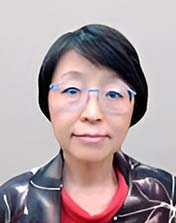
KYOKO KUSAKABE
Professor, Gender and Development Studies
Asian Institute of Technology
Thailand
Professor Kyoko Kusakabe is a leading scholar in gender and development studies at the Asian Institute of Technology, Thailand, and currently serves as Chair of the Gender in Aquaculture and Fisheries Section (GAFS). She played a pivotal role in the successful organization of the 9th Global Conference on Gender in Aquaculture and Fisheries (GAF9) held at AIT in October 2025, which highlighted the expanding scope and depth of gender-related research in fisheries and aquaculture.
Her academic journey began with a focus on gender, work, and migration, leading to research on fishing communities and fish trade. Through her engagement with GAFS, her interests have broadened to encompass the geographical, economic, political, and cultural dimensions of fisheries and aquaculture. She co-authored the FAO publication Women and Men in Small-Scale Fisheries and Aquaculture in Asia: Barriers, Constraints and Opportunities Towards Equality and Secure Livelihoods (2022), offering a comprehensive overview of gender dynamics in the region. Her recent collaborative work, Gender Monitoring Schema for Aquaculture Projects: Capturing the Process of Change (Aquaculture, 609: 742776), explores the intersection of gender equality and aquaculture development, based on the GAFS-IDRC project on gender-responsive climate solutions in Southeast Asia.
Professor Kusakabe is also co-editor of the book Fisherfolk in Cambodia, India and Sri Lanka: Migration, Gender and Well-being (Routledge, 2020), and serves as co-editor-in-chief of the journal Gender, Technology and Development (Taylor & Francis). Her editorial contributions extend to Maritime Studies (Springer) and Gender, Place and Culture: A Journal of Feminist Geography (Routledge). She is an Executive Committee member of the International Institute of Fisheries Economics and Trade (IIFET).
PAST CHAIR
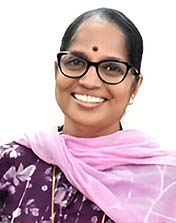
NIKITA GOPAL
Head, EIS Division & Principal Scientist
ICAR-Central institute of Fisheries Technology
Matsyapuri P.O., Cochin – 682 029 Kerala, India
Dr. Nikita Gopal is Head of the Extension, Information & Statistics Division and Principal Scientist at the Indian Council of Agricultural Research–Central Institute of Fisheries Technology (ICAR-CIFT), Kochi, Kerala, India. With a PhD in Agricultural Economics and 28 years of service at ICAR-CIFT, her work spans seafood trade and markets, technology evaluation in fisheries, and socio-economic studies among fishing communities. She has led and contributed to numerous national and international projects, including action-research initiatives.
A committed gender researcher in fisheries and aquaculture, Dr. Gopal has carried out several studies on women in seafood processing, small-scale aquaculture and fisheries, marketing, and post-harvest activities. In collaboration with the Network of Aquaculture Centres in Asia-Pacific (NACA), she worked with a multi-country team on gender in small-scale aquaculture systems in Thailand, Cambodia, Vietnam, and Lao PDR. During the COVID-19 pandemic, she successfully coordinated a SwedBio-funded project on women in seaweed farming in India and Kenya. Her current research interests include labour in fisheries, the social economy of dried fish production, and women in small-scale fisheries.
She has supported the International Collective in Support of Fishworkers (ICSF) in capacity-building initiatives for coastal fisherwomen under the FAO SSF Guidelines and served as a gender expert for the FAO-WorldFish,-Duke University 'Illuminating Hidden Harvest' study.
Dr. Gopal is a founding member and was inaugural Vice Chair of the Gender in Aquaculture and Fisheries Section (GAFS) of the Asian Fisheries Society (AFS). She served as Chiar, GAFS from 2022-25. In recognition of her sustained contributions to GAFS through leadership in conferences, research, and related activities, she received the AFS Gold Medal Award in 2022. She was also awarded the AFS Merit Award in 2013 and 2025, and Certificates of Appreciation in 2015, 2016, and 2017 for her leadership in GAFS conferences and publications.
She was part of the ICAR-CIFT research team that received the 4th National Award for Technology Innovation in Petrochemicals & Downstream Plastics Processing Industry (Runner-Up) in Polymer Science and Technology, instituted by the Department of Chemicals and Petrochemicals, Ministry of Chemicals and Fertilizers, Government of India.
Dr. Gopal is an elected Fellow of the Society of Fisheries Technologists of India (FSFT of SOFTI) and currently serves as its Secretary. She is also Chair of the Asian Fisheries Social Science Research Network and has published over 50 peer-reviewed articles in national and international journals.
VICE-CHAIR

ARLENE NIETES SATAPORNVANIT
Independent Consultant
Formerly Project Manager and Specialist for Organizational Development,
Gender Equality and Social Inclusion (GESI) and Monitoring,
Evaluation and Learning (MEL),
USAID Sustainable Fish Asia Local Capacity Development Activity,
RTI International, Bangkok, Thailand
Arlene (Jigsz) Nietes Satapornvanit has been working in fisheries and aquaculture in Asia-Pacific for more than 30 years, in various capacities, including fisheries extension officer, researcher, subject matter specialist, technical trainer, facilitator, developing curriculum and knowledge products including training modules and manuals, project implementer and manager. Her career spans from working with the Philippine Bureau of Fisheries and Aquatic Resources in the Philippines, to the region and globally as a researcher, technical trainer and program coordinator/manager at the Asian Institute of Technology, Thailand, and other regional organizations and global consulting companies. Since the early 2000s she has been directly involved in gender integration in the fisheries workplace, working with sustainable aquaculture and fisheries projects in the region, including marine biodiversity conservation and climate change adaptation. She has expertise in gender equality and social inclusion, sustainable and ethical aquaculture and fisheries, organizational capacity assessments and development, training and events management, policy and action plan development, project management and coordination, and participatory field research.
Her key skills include managing project activities and people, regional collaboration, and integrating gender considerations in technical project design, implementation, communication, and Monitoring, Evaluation, and Learning (MEL). She has been involved in various technical projects with gender as a cross-cutting theme, such as the CIDA-funded project on Urban Environmental Management in Southeast Asia with the Asian Institute of Technology, the EU-funded project, Sustaining Ethical Aquaculture Trade with the University of Stirling, Kasetsart University and a consortium of various universities and organizations in Asia and Europe, and USAID-funded projects such as Maximizing Agricultural Revenue through Knowledge, Enterprise Development, and Trade (Network of Aquaculture Centres in Asia-Pacific), the Oceans and Fisheries Partnership and the Sustainable Fish Asia (SuFiA) Technical Support with Tetra Tech ARD, and the SuFiA Local Capacity Development Activity with RTI International. Until recently she was the Chief of Party of the SuFiA TS Activity covering Southeast Asia and the Coral Triangle region.
Arlene is an alumna of the University of the Philippines (BSc Fisheries Business Management), Asian Institute of Technology (MSc Aquaculture), and University of Stirling (PhD Aquaculture). She is a member of the Gender in Aquaculture and Fisheries Section of the Asian Fisheries Society (GAFS/AFS), World Aquaculture Society, and the Asian Seafood Improvement Collaborative.
SECRETARY

KAFAYAT ADETOUN FAKOYA
Adjunct Faculty, Marine Biology,
Unity Environmental University, Maine, US
Kafayat Fakoya is an Adjunct Faculty member, transdisciplinary researcher and a consultant with a Ph.D. in Fisheries, focusing on small-scale fisheries, aquaculture, gender and social inclusion, monitoring and evaluation, seafood traceability, and nature-based solutions. She led a GAFS project on gender issues in freshwater fisheries with policy recommendations, funded by The Nature Conservancy. She is involved in the ongoing GeNA project in Southeast Asia and previously facilitated a Kenyan partnership for the SwedBio-supported project on "Dialogues in Gender and Coastal Aquaculture". Additionally, she coordinated GAFS consolidated contributions to the 10th anniversary of the SSF Guidelines.
TREASURER
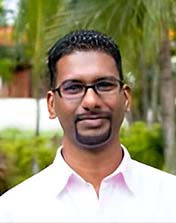
SURENDRAN RAJARATNAM
Senior Lecturer
Universiti Kebangsaan
Malaysia
Surendran Rajaratnam is a Senior Lecturer at Universiti Kebangsaan Malaysia at the Center for Research in Psychology and Human Well-being. He was a post-doctoral fellow at WorldFish, where he worked since 2013, before joining the University. At WorldFish, Surendran conducted a range of gender studies in rural communities in Asia and Africa. Among the first studies he conducted with WorldFish was a social and gender study in the Barotse floodplain in the Western Province of Zambia. Surendran also worked on the CGIAR GENNOVATE study, a large-scale, cross-country qualitative study focusing on gender in agricultural and food systems in Bangladesh and the Philippines. He was also involved in a joint WorldFish and FAO project that conducted a series of case studies in Bangladesh and Indonesia on women’s empowerment in aquatic food systems. Surendran has also led the design and implementation of gender studies in Assam, India, in collaboration with the Royal Tropical Institute of the Netherlands (KIT) and the Assam Rural Infrastructure & Agricultural Services Society (ARIAS) as part of a World Bank- funded project. In addition to gender studies in rural communities, Surendran has also completed a PhD study in Social Work which explored the experiences of women refugees who had sought asylum in Malaysia. The thesis focused on the healthcare issues refugee women face and their access to healthcare services in public hospitals in Malaysia. Surendran is also a fellow at HEALTHCOMM, a research center at Universiti Kebangsaan Malaysia dedicated to empowering communities to improve their health-seeking behaviors. The center operates as a collaborative unit focused on advocacy and community engagement. Apart from his research in the University focused on gender and health, Surendran is currently the focal point for Gender Equality and Social Inclusion (GESI) in the Climate-Adaptive, Inclusive, Nature-based Aquaculture research project funded by IDRC in Malaysia. He works with his team in UKM and other partner Universities to ensure that gender equality, social inclusion and community health and well-being are integral in the research. He has also authored and co-authored numerous publications ranging from journal articles, research reports, blogs and briefs.
ELECTION COMMITTEE COORDINATOR
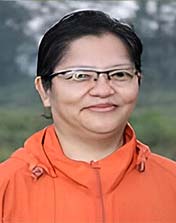
SUNILA RAI
Chairperson
Nepal Fisheries Society
Nepal
Dr. Sunila Rai is a distinguished Professor of aquaculture and fisheries in the Department of Aquatic Resources and Controller of Examinations at the Agriculture and Forestry University (AFU), Rampur, Chitwan, Nepal. She earned her Doctor of Technical Science in Aquaculture and Aquatic Resources Management and a Master’s degree in Aquaculture from the Asian Institute of Technology (AIT), Thailand, in 2007 and 1997, respectively. Additionally, she holds an M.Sc. in Zoology from Tribhuvan University, Nepal.
With over 25 years of professional experience, Prof. Rai has held several key academic and administrative positions, including Assistant Dean (Academics) at the Faculty of Animal Science, Veterinary Science and Fisheries, AFU; Head of the Department of Aquaculture; and Deputy Director of Research and Publications at the Institute of Agriculture and Animal Science (IAAS), Tribhuvan University.
Her primary research interests lie in nutrition-sensitive aquaculture, low-cost aquaculture technologies, and women's empowerment. She has conducted extensive research on carp and small indigenous species (SIS) polyculture, periphyton-based aquaculture using rice straw and bamboo substrates, and biofloc-based tilapia farming. Prof. Rai has led multiple nationally and internationally funded research projects, with support from organizations such as USAID, Danida, the governments of Finland and Switzerland, and the Nepal Agriculture Research and Development Fund. She has authored 37 articles in peer-reviewed national and international journals, along with four technical manuals for farmers. A pioneer in developing SIS-based carp polyculture systems, Prof. Rai has significantly contributed to improving livelihoods and nutritional outcomes, especially among women farmers in Nepal. Her extension activities are primarily carried out through women fish farmers’ cooperatives in the Chitwan and Nawalparasi districts.
Prof. Rai currently serves as the Chairperson of the Nepal Fisheries Society (NEFIS) and Editor of the Journal of Agriculture and Forestry University. She is also an advisor to the Organization of Women Scientists in Nepal (OWSN), a board member of FORWARD-Nepal, and an active member of several professional bodies, including Gender in Aquaculture and Fisheries (GAF) under the Asian Fisheries Society, and the Organization for Women in Science for the Developing World (OWSD). Most recently, she led the successful organization of the International Conference on Aquaculture and Fisheries (ICAF) 2024 in Nepal.
CONSTITUTION COMMITTEE COORDINATOR
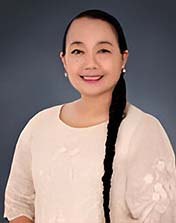
ALICE JOAN FERRER
Professor, Division of Social Sciences
University of the Philippines Visayas
Miagao, Iloilo, Philippines
Dr. Alice Joan G. Ferrer is Professor 12 and a UP Scientist at the University of the Philippines Visayas (UPV).
A member of the Asian Fisheries Society since 2004, she has held the positions of councillor (2013–2015), vice-president (2015–2019), president (2019–2022), and immediate past president (2022-2025). Similarly, Dr. Ferrer has served as one of GAFS inaugural officers from 2017 to 2022. She was elected in 2022 for a term of three years.
Currently, Dr. Ferrer heads the pilot site in the Philippines for the project on developing gender-responsive monitoring in nature-based climate solutions aquaculture projects in Southeast Asia (2024 – 2027). Her other current research projects include the implementation of Small-Scale Fisheries Guidelines in the Philippines, gleaning in the Philippines, and patron-client relationships in Philippine fisheries, among others.
She is the founding executive director (2023 to present) of the National Consortium for Small-Scale Fisheries Research and Development (aka TBTI Philippines), which has as members 48 higher education institutions in the Philippines. She has been engaged in other public service work, having been the executive director of a regional health R&D consortium of the Department of Science and Technology-Philippine Council for Health Research and Development for 14 years, chair of the Research Ethics Monitoring Board, and also the vice-chair of the Capacity Building Committee of the Philippine National Health Research System. She is instrumental in the establishment of the Socio-Economic Research and Data Analytic Center in UPV and has been the head since 2021.
Her recent gender publications include co-authorship for a journal article on a gender monitoring scheme for aquaculture project, the gender chapter in the report on Illuminating Hidden Harvest, journal articles on the value chain of sergisted shrimp catching, a guide to supporting early career women researchers within academic marine research institutions, and the identification of actions to promote gender equality in interdisciplinary marine research institutions.
She finished her PhD (Economics) degree from the University of the Philippines School of Economics. Her research interests are in health economics, fisheries and aquaculture social sciences, policy analysis, gender, governance, climate-smart agriculture, and others. Currently, she is the Vice-Chancellor for Academic Affairs of UPV. She also serves as Associate Editor of Asian Fisheries Science and member of the editorial board of The Philippine Fisheries Journal.
MEMBERSHIP COMMITTEE COORDINATOR
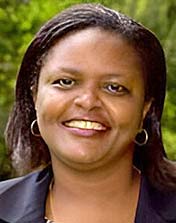
RAHMA ADAM
Senior Scientist and Social-Economic Inclusion Impact Lead at WorldFish,
Kenya
Dr. Rahma Adam is a Senior Scientist and Social-Economic Inclusion Impact Lead at WorldFish, with over a decade of progressive experience in gender, agriculture, aquaculture, and international development. She holds a PhD in Rural Sociology from Pennsylvania State University, a Master in Public Policy from Harvard University, and a BA in Biology from Macalester College. Dr. Adam has held key research and advisory roles at the International Maize and Wheat Improvement Center (CIMMYT), CIFOR, CIP, the World Bank, and Harvard University. She has conducted research and policy engagement across Africa, Asia, and the U.S., and has led multidisciplinary teams to address gender, social inclusion, livelihoods, and climate resilience in aquatic food systems.
At WorldFish, she spearheaded the development of the Gender Equality and Social Inclusion (GESI) Strategy for aquatic food systems, integrating inclusive research across six impact pathways—from policy development and inclusive innovations to gender-transformative approaches and climate adaptation. Her notable contributions include the co-development of critical research tools like the Women’s Empowerment in Fisheries and Aquaculture Index (WEFI), the gendered aquaculture value chain and its proto type the gendered fisheries value chains+ post-harvest loss and waste methodologies. At WorldFish she has also been continuing with capacity building workshops, and she has been able to train over 250 researchers on gender in fisheries and aquaculture research methods and gender in one Health in agri-food systems. Previously at CIMMYT, she led gender research in 12 African countries, developed inclusion-focused seed system tools, and trained over 200 stakeholders across CGIAR, NARS, and private sectors. She has authored 25 peer-reviewed articles, over 50 technical reports, briefs, policy discussion briefs, blogs and other related outputs, and mentored graduate students and young researchers.
Dr. Adam is committed to advancing inclusive aquatic food systems globally. Her deep expertise, leadership in research and strategy, and collaborative spirit make her a strong asset to the GAFS Executive Committee.
GENERAL MEMBERS
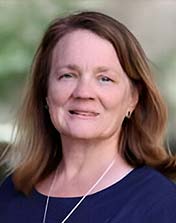
HOLLY HAPKE
Director of Research Development,
School of Social Sciences,
University of California,
USA
Dr. Holly Hapke is a feminist economic geographer, political economist and interdisciplinary social scientist with research interests in the areas of gender, development, cultural economy, fisheries and food production, migration, human-environment interactions, feminist theory, and South Asia.
Over the past 30 years, Dr. Hapke has conducted research on several topics broadly related to gender and the impact of global economic and technological transformations on small-scale fisheries and fisherfolk communities and livelihoods in the Global South. Specific projects have focused on the cultural economy of fish markets, commodity chains, and impacts of mechanization on small-scale fish traders; Gulf migration, livelihoods, and changing household gender relations in coastal communities; women’s labour in the social economy of dried fish; the role of fish in food security for the urban poor in India and Ghana; and the gendered impacts of the blue economy on small-scale fishing communities in the Indian Ocean region. She was also one of the gender experts for the Illuminating Hidden Harvest study.
Dr. Hapke earned her PhD in Geography from Syracuse University (USA). She is a former Fulbright Scholar and Fulbright-Hays Fellow in India. She has authored over 50 publications and has designed and conducted numerous workshops and training seminars on gender analysis in fisheries and aquaculture research. From 1996-2018 she was a professor of geography at East Carolina University and served as associate dean for faculty development in the College of Arts and Sciences from 2010-2014. From 2014-2017 she served as a program director at the U.S. National Science Foundation. Currently Dr. Hapke is a senior researcher and director of research development in the School of Social Sciences at the University of California, Irvine.
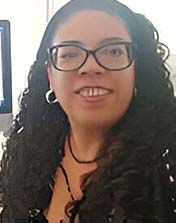
CARMEN PEDROZA-GUTIÉRREZ
Senior Researcher
ENES-Mérida
Universidad Nacional Autónoma de México, México
Carmen Pedroza Gutiérrez is a full-time researcher at the National School of Higher Studies–Mérida Unit (ENES-Mérida) of the National Autonomous University of Mexico (UNAM). She holds a Ph.D. in Development Socioeconomics from the École des Hautes Études en Sciences Sociales (EHESS) in Paris, and master's degrees in International Relations (University of Sussex) and Development Studies (University of East Anglia), both in the UK.
Her research focuses on gender and fisheries, organizational dynamics in fish trade, social networks, and supply systems in small-scale fisheries. She has published over 30 academic works and actively participates in national and international forums.
She is a Level 1 member of Mexico’s National System of Researchers (SNI) and has received awards such as the Yamamoto Prize, the Rosemary Firth Award, and the Women in Seafood Video Competition. She is part of various international networks, including GAF, RICOMAR, N2N-GoM, and currently serves as President-Elect of IIFET and Latin American representative for IAFI. She also coordinates the Internal Committee for Gender Equality at ENES-Mérida.
NEWSLETTER EDITOR
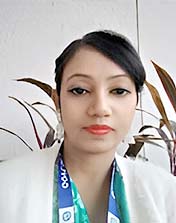
PIYASHI DEBROY
Senior Scientist
ICAR – Central Inland Fisheries Research Institute
Barrackpore, Monirampur, Kolkata – 700120, West Bengal, India
Dr. Piyashi DebRoy holds a PhD in Fish Business Management and is presently serving at the Indian Council of Agricultural Research (ICAR) - Central Inland Fisheries Research Institute (CIFRI) since 2017. Prior to this, she served as a Scientist at the ICAR Research Complex for North-East Hill Region in Umiam, Meghalaya from 2015 – 17. Her areas of work include economic valuation of natural resources, socio-economic dynamics in inland fisheries, and gender in freshwater fisheries. She has worked in national and international projects and also in consultancy studies in the area of livelihood and gender research.
Dr. DebRoy has carried out research in the role of gender in natural resource valuation, gender equity in inland fisheries, and women’s participation in freshwater fisheries. She was involved in a consultancy research study with the Network of Aquaculture Centres in Asia-Pacific (NACA) in studying gender baselines in aquaculture value chains in Cambodia, Lao PDR, Thailand and Vietnam. She is a recipient of the Gender in Aquaculture and Fisheries Section of the Asian Fisheries Society (GAFS) and CGIAR Research Program on Fish Agri-Food Systems (FISH) Award on Shift in Gender Equity – A Model Study from Reservoirs, Wetlands and Rivers in India. She is presently involved in studying the dynamics of women in riparian fisheries in India. She acted as a reviewer of the Draft Co-operative Action Plan for Decent Work and Thriving Businesses for Women in Fisheries by the USAID Sustainable Fish Asia Local Capacity Development (SUFIA LCD) Activity and the GAFS. She was also a recipient of the GAF4 AquaFish-CRSP Best Student Paper Award in 2013 for her paper on Importance of Mangrove Conservation and Valuation to Women – A Case Study in Pichavaram mangroves in India. She is also involved presently in a Bay of Bengal Programme – Inter-Governmental Organization sponsored BIMREN Twinning Research Project at ICAR – CIFRI on Developing Transboundary Management Strategies for Hilsa Fishery in the Bay of Bengal Region under Changing Climate with project partners from India, Bangladesh and Myanmar.