WHAT WE BELIEVE IN
About US
genderaquafish.org, is devoted to the exchange of information on gender in aquaculture and fisheries from all parts of the world. Supported by the Gender in Aquaculture and Fisheries Section (GAFS) of the Asian Fisheries Society, , it welcomes contributions, links and comments, from researchers and other experts with professional interests in furthering gender research in aquaculture and fisheries development. We have a world-wide interest in what is happening on gender in aquaculture and fisheries. Any views expressed on the website are the personal views of the authors of individual articles and do not represent the views of the Asian Fisheries Society or any other organization. genderaquafish.org was established in 27 September 2010 specifically to serve as the 2011 3rd Global Symposium on Gender in Aquaculture and Fisheries. Soon, however, we began using it to also post news of new research, studies and events, and gradually added some additional materials of background interest to readers. The website was redeveloped in 2017/2018
executive commitee

Nikita GOPAL

Kyoko Kusakabe

Kafayat Adetoun Fakoya

Arlene Nietes Satapornvanit

A K M Nowsad ALAM

Alice Joan FERRER

Danika Kleiber

SARAH HARPER

ANN ELIZABETH FLEMING

MADU GALAPPATHTHI

Meryl J Williams
JOIN HANDS with us
You are welcome to join the Gender in Aquaculture and Fisheries Section of the Asian Fisheries Society: Send a short message to the AFS Executive Officer, indicating that you wish to join GAFS
lATEST NEWS AND STORIES

Economic outcomes in small-scale fish trade: The role of gender norms
Economic analysis of market data was conducted by the research team to understand quantitative differences in livelihood outcomes for women and men engaging in the same trading activities at the same markets. Results from economic models show that gender is a key factor influencing earnings in fish trade and that other important drivers, including processing type and selling market size and location, are also shaped by gender. The team found that while women and men participate in fish trade in near-equal numbers in Malawi, women are earning less money per unit than men and tend to trade in smaller volumes.

A Review of the Multi-dimensional Perspectives of Taboos on Gender Roles of Fisherfolk in the Global South
Traditional knowledge and belief systems can play an important role in contemporary governance systems, making valuable contributions towards sustainable fisheries; however, understanding the role that taboos play in mediating human interactions with ocean resources, especially those limiting women’s access to such resources, is necessary for advancing gender equity in small-scale fisheries.

GeNA Call for Proposals: Gender and NbCS aquaculture systems
Call for proposals: two consultancies in our GeNA project

GeNA: Developing gender-responsive monitoring in NbCS aquaculture projects in Southeast Asia
The Gender in Aquaculture and Fisheries Section (GAFS) of the Asian Fisheries Society (AFS) has been awarded a 46 months project titled “Making nature-based climate solutions (NbCS) in aquaculture in Southeast Asia monitoring more gender-responsive: What gets measured gets done.” GeNA or Gender-responsive NbCS in Aquaculture for short is supported by IDRC Canada’s AQUADAPT-SEAPAC grant.

Participatory Action Research enhances fish smokers’ willingness to adopt social change and technology innovation in Lagos, Nigeria
A recent project in Lagos, Nigeria focused on the use of participatory action research (PAR) to change the beliefs, dispositions, and interactions between fish smokers and researchers. It demonstrated how PAR stimulated interest among fish smokers in biomass briquettes and a prototype drum smoking kiln. It also encouraged co-ownership of the research and the readiness to use contemporary technology.

Video tribute to women fishing around the world
Inspired by the International Year of Artisanal Fisheries and Aquaculture in 2022, the Gender in Aquaculture and Fisheries Section presents a global video tribute to women fishing.
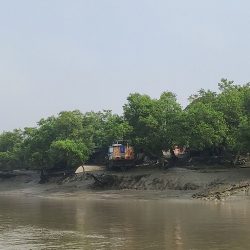
Amphibious Living Opportunities: ALO for the Sundarbans
Vijay Mahajan and SS Tabrez Nasar ask what can the people living in precarious locations in the Indian Sundarbans do to survive rapidly encroaching climate and ecosystem threats? The communities will need to quickly adapt to “Amphibious Living,” including by choosing “Amphibious Living Opportunities.” Abbreviated as ALO (আলো) in the local language, Bengali , this means “illumination” or “light” and also signifies “dawn”.

Masculinities riptide: wind in the sails or anchor for the inclusion of gender in fisheries?
By Neyra Solano and Inés López-Ercilla.
Physical strength, toughness, and endurance. These are some of the most common bodily attributes associated with men. These attributes play an important role in defining whether one is a fisher or not, as these masculinity expressions are generally present in fishing. Therefore, people who do not participate in harvesting (fishing) and who do not reflect these characteristics, such as women, are not usually considered part of the sector, even when according to official data, they make up half of the fisheries workforce worldwide, when pre- and post-production activities are also considered.

Gender @ 12th Indian Fisheries and Aquaculture Forum
The 12th Indian Fisheries and Aquaculture Forum (12IFAF) was held in Chennai from 5 to 7 May 2022. We are pleased to report on two events with special relevance to gender in aquaculture and fisheries. The first is an award to a gender stalwart, Dr B. Shanthi, and the second is a report by Dr Nikita Gopal of the Special Session on Gender in Fisheries held at 12IFAF.

Calling for Cooperation in Action for Decent Work and Thriving Businesses for Women in Fisheries
The Cooperative Action Plan recognizes this issue and presents a guide for addressing gender and labor issues faced by women workers in Asia-Pacific fisheries and aquaculture. It focuses on women’s labor and business opportunities, recognizing that women are not a homogenous category and their needs vary according to their working situations, life stages from youth to elderly, ethnicity, education, social and economic positions, immigrant status, among others. A call is made to individuals and organizations to make the Plan a reality.

Reflections on Gender and Fisheries: Through the lens of presentations @ 13AFAF
The 13th Asian Fisheries and Aquaculture Forum (13AFAF) was a watershed for how gender was included in Asian Fisheries Society’s triennial Forums. Gender topics were in the Plenary, as a topic session and in the Forum’s graphic elements. The gender theme has come a long way in Asian Fisheries Society and can still go much further. Three messages to take home: why and how research is practices is critical to gender; need to focus more on women’s agency rather than their victimhood and marginality; and gender relations are dynamic under changes in resources and even new technologies.
